By Maria Concas, Founder & Managing Director, Diamond Shine Cleaning
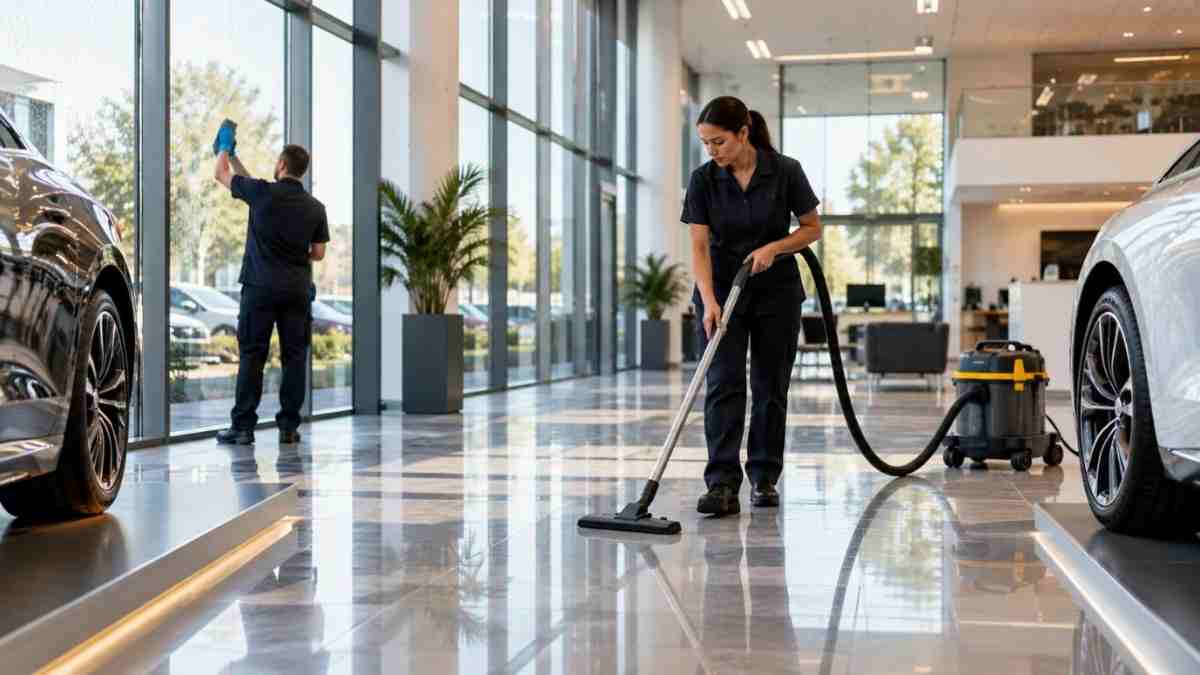
In a car showroom, the cars are carefully polished and positioned under lighting that shows them at their best. The surrounding glass, floors and customer areas need attention too. Fingerprints on an entrance door or wet footprints beside a display car can be especially noticeable in a bright, open space.
Diamond Shine’s automotive customer portfolio includes businesses across the sector. That experience with automotive businesses is relevant when considering the cleaning requirements of showrooms and dealerships, although different premises will need different arrangements. A showroom has more in common with an office than people might expect, but the display vehicles, lighting and customer-facing layout create their own practical considerations.
What Makes Car Showroom Cleaning Different From Ordinary Office Cleaning?
Car showroom cleaning involves many of the same tasks as office cleaning, including floors, glass, reception areas, toilets and shared facilities. The difference is often how visible those surfaces are and how carefully the work needs to be carried out around vehicles.
Daylight and overhead lighting can make dust, streaks and floor marks easier to see. A mark on a polished floor might be relatively inconspicuous in a busy office but stand out beside a display car.
The same principles apply across commercial cleaning, although showroom layouts require particular care around vehicles and display areas. Cleaning equipment needs to be positioned sensibly, and the team must know which areas can be accessed while the dealership is operating.
Why Are Showroom Floors So Important, and How Should They Be Cleaned?
Showroom floors may be finished in porcelain tiles, polished concrete, resin or other hard materials. Each surface needs a suitable cleaning method, and the products and equipment used should be appropriate for the particular finish.
Large porcelain tiles, for example, may show footprints and streaks clearly under showroom lighting. Polished concrete and resin flooring have different maintenance requirements, so it’s worth establishing the manufacturer’s recommendations before agreeing on cleaning products or periodic treatments.
The vehicles themselves also affect how the work is carried out. Cars may be moved into position for display, customers walk around them throughout the day, and sales staff regularly cross the floor between desks and vehicles.
Cleaning around expensive cars requires care. Equipment shouldn’t be pushed close to vehicle bodywork, and cleaning products need to be handled with the surrounding surfaces in mind.
A dealership manager reviewing a cleaning quotation should ask which methods will be used on the showroom floor and whether any periodic maintenance is included. It’s better to establish that before work begins than discover later that the floor needs a treatment outside the regular cleaning arrangement.
How Does Dublin’s Weather Affect Car Showroom Cleaning?
On a wet Dublin morning, a showroom entrance can change appearance quite quickly.
Customers arrive with wet shoes, bringing rainwater and grit through the doors. Footprints become noticeable on light-coloured or reflective floors, particularly near the entrance and the first row of display vehicles.
Entrance matting helps reduce the amount of dirt carried inside, but it won’t eliminate the problem. On days of persistent rain, the entrance may need additional attention to keep the floor presentable and address wet patches.
This is worth discussing when arranging showroom cleaning services in Dublin. If the dealership is particularly busy during the day, an evening clean alone may not address everything that happens around the entrance during opening hours.
The appropriate arrangement depends on the building, the floor finish and the level of customer traffic.
Why Does Glass Cleaning Matter So Much in a Car Dealership?
Large windows and glazed entrances are often central to a car showroom’s design. They bring natural light into the building and allow people outside to see the vehicles on display, but fingerprints, streaks and rain marks can also be highly visible.
Glass can appear clean from one angle, while sunlight reveals streaks from another. Entrance doors tend to collect fingerprints around handles and the areas people naturally push or pull.
Internal glass partitions around sales offices and meeting rooms need attention as well, particularly where customers sit down to discuss a purchase.
It’s useful to distinguish between routine cleaning of accessible internal glass and more extensive window cleaning. A dealership may have high glazing or large external windows that require separate equipment or arrangements.
Agree which surfaces are included in the window cleaning schedule and how often they need attention. That avoids uncertainty about whether particular windows, partitions or glazed doors are covered by the regular contract.
How Should Customer Waiting Areas and Reception Desks Be Cleaned?
Customer waiting areas and reception desks need regular attention because they’re used throughout the working day. Seating, tables, counters, floors and frequently touched surfaces should be cleaned at a frequency that reflects how busy the dealership is.
These spaces can show everyday use quite quickly. Coffee cups may be left on tables, chairs get moved around, and fingerprints appear on counters and glass partitions. Customers waiting for vehicle servicing may spend considerably longer in these areas than someone who has simply called in to look at a car.
Some dealerships also have children’s areas, which need to be considered when agreeing on the cleaning requirements.
Customer toilets are another important part of the arrangement. The number of people using them, the opening hours and the availability of staff facilities all affect how often they need attention.
A relatively small waiting area can experience heavy use, so its cleaning requirements shouldn’t be judged on size alone.
What Should Cleaners Know About Working Around Display Vehicles?
Cleaning a showroom building is not the same as cleaning or detailing the cars displayed inside it.
The cleaning company may be responsible for floors, windows, desks and customer facilities, while vehicle preparation and detailing remain the responsibility of dealership staff or a specialist provider. Those boundaries should be agreed before the contract starts.
It’s also important to understand how the showroom operates.
Cars may be moved regularly, display layouts can change, and certain routes need to remain clear for staff and vehicles. Cleaning equipment should never obstruct those areas.
If vehicles are being repositioned, cleaners need to know which parts of the showroom are available and whether particular work should be delayed.
These are straightforward matters to discuss during an initial assessment, but they make a difference to how the cleaning is carried out.
When Is the Best Time to Clean a Car Showroom?
The main cleaning work is often easier to complete outside busy customer hours. Early mornings, evenings or other agreed quiet periods allow cleaners to access display areas, reception desks and floors without interrupting sales staff or customers.
The best arrangement depends on the dealership’s opening hours and how the building is used.
Customers may arrive close to closing time, sales staff might still be completing paperwork, and vehicles may be moved in preparation for the following day. A cleaning schedule needs to allow for these ordinary changes.
If a sales office is still occupied, the cleaner can attend to another area and return later. If vehicles are being moved, equipment should be kept clear until the work can continue.
The agreed schedule matters, but so does common sense when the building isn’t running exactly to plan.
How Often Should a Car Showroom Be Professionally Cleaned?
Cleaning frequency depends on the size of the showroom, customer traffic, floor finishes, opening hours and the number of shared facilities.
A large dealership with several display areas and a busy service department may need a different arrangement from a smaller showroom operating mainly by appointment.
Some tasks, such as cleaning entrance floors, customer toilets and reception areas, may need daily attention. Other work, including certain window-cleaning tasks or specialist floor treatments, can be scheduled periodically.
Before deciding on frequency, I’d suggest looking at the areas that cause the most problems during an ordinary working week.
Does the entrance floor become marked before lunchtime? Are fingerprints building up on glass doors? Is the waiting area being used more heavily than it was when the original cleaning schedule was agreed?
The answers help establish whether the current arrangement suits the business. There’s little benefit in paying for unnecessary work, but a schedule that doesn’t account for actual usage can leave staff dealing with cleaning issues during the day.
What Should Be Included in a Car Showroom Cleaning Contract?
A contract cleaning arrangement should identify the areas covered, task frequencies, access times and exclusions. For a dealership, it should also clarify any specialist floor or glass cleaning requirements and whether vehicle detailing is outside the agreed scope.
I’d recommend discussing the following before accepting a quotation:
- Showroom floors: Which surfaces are included, what cleaning methods will be used and whether periodic treatments are required.
- Glass: Which internal and external windows, doors and partitions are covered.
- Customer facilities: How often reception areas, waiting rooms and toilets will be cleaned.
- Staff areas: Whether offices, kitchens, meeting rooms and other back-of-house spaces are included.
- Access: When cleaners can enter the premises and which areas may remain occupied.
- Additional work: How cleaning after promotional events, vehicle launches or changes to the showroom will be arranged.
- Exclusions: Whether vehicle cleaning, specialist treatments or other tasks require separate quotations.
These details are worth establishing while the premises are being assessed.
A dealership manager might assume that a particular glass area is included, while the cleaning company understands the agreement differently. The same misunderstanding can arise with staff kitchens, customer toilets or offices behind the main showroom.
A clear specification gives both sides something practical to refer to if requirements change.
Why Does Consistency Matter in Car Showroom Cleaning?
A dealership needs its cleaning standard to remain dependable throughout the working week. Customers should find the entrance, showroom floor and shared facilities properly maintained regardless of which day they visit.
There will occasionally be changes to the usual routine. Cleaners may be absent, the dealership may become unexpectedly busy, or additional work may be needed after an event.
That doesn’t mean every issue can be anticipated. It does mean the cleaning arrangement should establish who is responsible for responding when something needs attention.
For a dealership manager, it’s sensible to ask how missed tasks are reported, who the main contact will be and what happens if the cleaning requirements change.
What Should a Dealership Manager Check Before Requesting a Cleaning Quotation?
Before requesting a quotation, identify the areas that need daily attention, any periodic floor or glass work, and the times when cleaners can access the premises. Agree who to contact if the schedule changes or an area needs further attention.
If you manage a showroom or dealership in Dublin, Diamond Shine can discuss the premises, opening hours and cleaning requirements with you before preparing a quotation.